


Official Website : https://divinenewz.com/
1. INTRODUCTION
Vaishakh Month 2026 is not just a calendar month. In Hindu tradition, it is a sacred period of renewal, discipline, and prosperity. According to the 2026 reference calendar, it runs from April 3rd to May 1st.
Baishakh, also spelled Vaishakh or Vaishakha, is one of the months with the most spiritual significance in the Hindu calendar. In many traditions, it is the second month of the Hindu lunar year and is widely associated with purity, devotion, charity, holy bathing, fasting, and the worship of Lord Vishnu and Goddess Lakshmi. For the 2026 New Delhi Reference Panchang. Vaisakha will begin on April 3, 2026, and end on May 1, 2026. Dates of Hindu festivals may vary by city and local calendar, so regional observances may differ by one or more days.
Baishakh holds widespread cultural significance across India. In the North Indian and Bengali context, this spring season brings several important solar festivals, such as Baisakhi/Vaisakhi on April 14, 2026, the Bengali New Year on April 15, 2026, and Pohela Boishakh on the same Bengali New Year date in the 2026 reference calendar. These celebrations demonstrate that Baishakh is not only a month of religious observances, but also a season of new beginnings, community joy, and gratitude for the harvest.
2. WHAT IS THE MEANING OF THE MONTH OF BAISHAKH IN HINDU TRADITION?
The name Baishakh comes from the ancient month Vaisakha, which is associated with lunar and solar calculations used in various Indian traditions. In Hindu calendars, months are not merely units of time; they are vibrant sacred seasons, each determined by dates, constellations, fasts, and festivals. Vaishakh is considered a month of high virtue because it is repeatedly associated with Vishnu worship, holy baths, charity, and special fasting days.
In simple spiritual terms, Baishakh is the month when people are encouraged to begin anew with physical cleanliness, clarity of thought, and steadfastness of devotion. It is a time to reduce indulgences, control the senses, remember God, and accumulate merit through righteous actions. This is why this month is considered especially auspicious for prayer, worship, charity, chanting, fasting, a virtuous life, and pilgrimage.
The significance of this month is reflected in the many holy dates that fall within it, including Varuthini Ekadashi, Akshaya Tritiya, Ganga Saptami, Sita Navami, Mohini Ekadashi, Narasimha Jayanti and Vaisakha Purnima.
3. WHY BAISHAKH IS CONSIDERED AUSPICIOUS?
Vaishakh is considered auspicious because it brings together many streams of Hindu spirituality. It is a month of worship at sunrise, bathing early in the morning, fasting on Ekadashi and Purnima days, and charity. Many devotees bathe in holy waters during Vaishakh, and some even vow to bathe daily throughout the month. Offerings to ancestors through tarpan (offerings) and havan (fire sacrifice) are also considered important in this tradition.
The month of Baisakh also marks a solar transition and seasonal refreshment. In 2026, this month includes Mesha Sankranti on April 14, the entry of the Sun into Aries, and celebrations related to Vaisakhi, Puthandu, and Vishu in various regional traditions. Mesha Sankranti, the Solar New Year, Puthandu, Baisakhi, Vishu Kani, and Pohela Baishakh among these days, demonstrating how a sacred season can be celebrated in multiple cultural languages.
4. THE SPIRITUAL BENEFITS TRADITIONALLY ASSOCIATED WITH BAISAKH
In Hindu tradition, the “benefits” of Vaisakha are not understood merely as material promises. These are spiritual and moral benefits: inner purification, discipline, increased virtue, and a deeper connection to dharma. A month like Vaisakha is believed to help devotees become more mindful of daily conduct, more devoted in worship, and more generous toward others. This month encourages a life that is less turbulent and more in harmony with sattva, the quality of balance and clarity.
One of its primary benefits is the adherence to a sacred routine. Waking up early, bathing before sunrise, praying, and fasting creates a disciplined rhythm that influences the entire day. Another benefit is strengthening devotion to Vishnu, Lakshmi, and the most revered deity in one’s family tradition. Vaishakh Purnima is considered auspicious, and Satyanarayana worship is common on full moon days, and many families observe a one-day Purnima fast according to their family tradition.
The third benefit is the practice of giving alms. Vaisakha is often considered a month of Daan. The Akshaya Tritiya guidance giving charity to Brahmins or the needy, and the month is also associated with holy baths and offerings to ancestors. Inspired by devotion, giving alms in Vaisakha multiplies inner merit as the month is considered spiritually “open” and abundant.
It also has a psychological benefit. During this month, we are repeatedly reminded to slow down, fast, pray, and reflect, which can reduce ego and excessive attachment. A devotee learns that life is not just about profit, but also about the right timing, the right intention, and the right action. In this sense, Baisakh becomes a month of spiritual restoration.
5. CORE RITUALS OF BAISAKH MONTH
The major rituals of Vaisakha are simple, but they gain depth with repeated practice. The most important of these is the holy bath. Many devotees take a holy bath during the month of Vaisakha, based on the traditional belief that bathing in sacred waters before sunrise during this month brings blessings from Lord Vishnu and Goddess Lakshmi. Even if bathing in a river is not possible, the feeling of purification remains important.
The second major ritual is puja. During Baisakh, devotees often worship Vishnu, Lakshmi, Shiva, Surya, Durga, Ganesha, and local family deities according to custom. On special days such as Akshaya Tritiya, Varunini Ekadashi, and Vaishakh Purnima, puja becomes more elaborate and may include fasting, chanting, lighting flowers, incense, lamps, and offerings of fruits and sattvik food.
Fasting is another important practice. This month includes the observance of Ekadashi, Pradosh, Masik Shivaratri, and Purnima. Ekadashi is on April 13, 2026, Masik Shivaratri and Pradosh fasts on April 15, 2026, and Vaishakh Purnima on May 1, 2026. These fasts are not just acts of restraint; they are acts of remembrance and self-control.
Charity is equally important. This month is often marked by the donation of food, clothing, grains, water, and other essential items. This tradition is particularly strong on Akshaya Tritiya: the Drik Panchang states that giving on this day is virtuous, and includes helping the needy. In many homes, people feed guests, help laborers, feed cows or birds, or contribute to temples and community welfare.
6. AKSHAYA TRITIYA: THE HEART OF BAISAKH AUSPICIOUSNESS
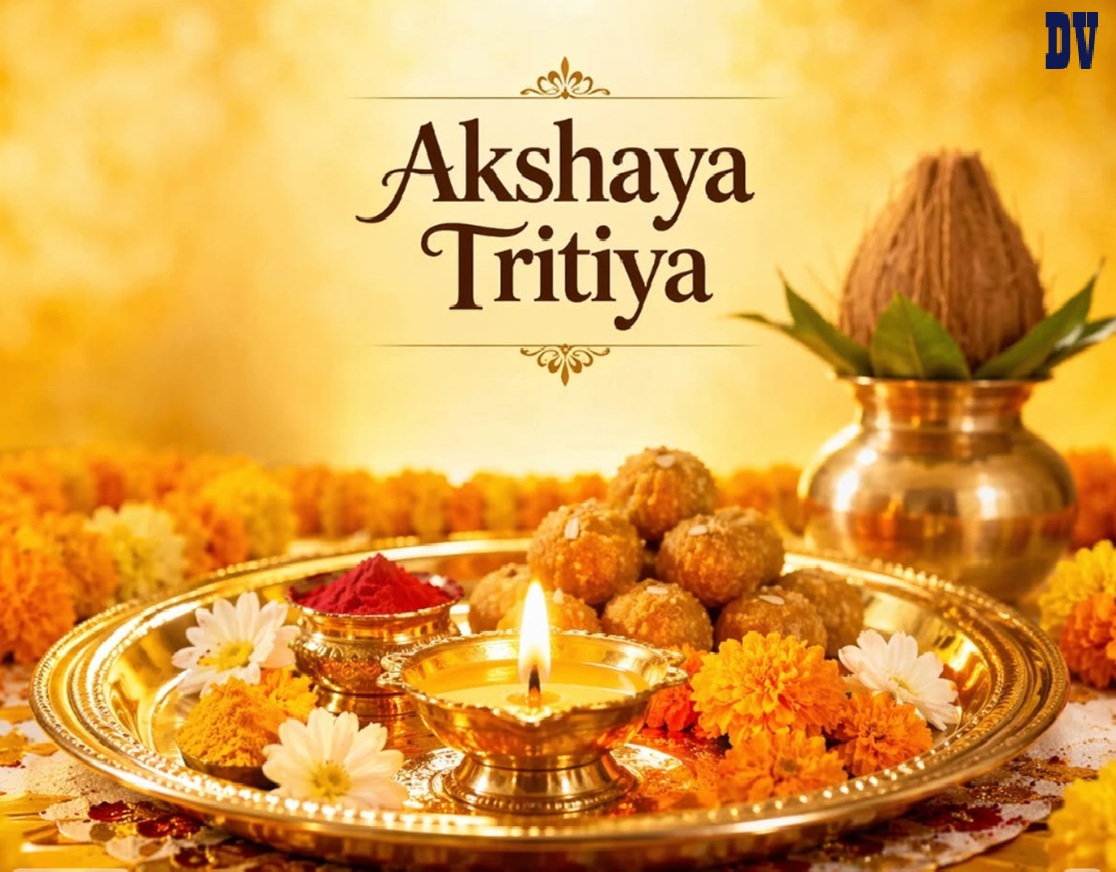
Akshaya Tritiya is one of the most celebrated holy days of the month of Vaishakha. In 2026, it falls on Sunday, April 19th. Being the third day of the bright fortnight in the month of Vaishakha, it is considered highly auspicious for Vishnu and Lakshmi and is traditionally associated with the beginning of the Treta Yuga. The word “Akshaya” means that which never diminishes, and this idea shapes the devotional spirit of this day.
Traditionally, Akshaya Tritiya is a day of worship, fasting, charity, and other auspicious activities. Rituals on this day include bathing in holy places, offering prayers to ancestors, donations, havans, purchasing gold, and even holding weddings or housewarming ceremonies. It’s also worth noting that this day often doesn’t require a separate muhurta (moon time) for many auspicious beginnings.
Akshaya Tritiya also coincides with Parashurama Jayanti in many traditions. This day usually coincides with the birthday of Parashurama, the sixth incarnation of Lord Vishnu, although in some years it may be celebrated a day earlier or later depending on the calendar. In 2026, this day falls in the middle of the month of Vaisakha, giving this month the most potent symbolism of purity and prosperity.
7. VARUTHINI EKADASHI AND THE DISCIPLINE OF FASTING
Varuthini Ekadashi falls at the beginning of the month, on April 13, 2026. Ekadashis hold special significance in Vaishnava devotion, and Vaishakh Ekadashi is observed with special reverence because the month itself is considered sacred. This day is part of a broader cycle in which the body is purified through fasting and the mind is purified through the remembrance of Vishnu.
The deeper meaning of Ekadashi in the month of Baisakh is restraint. It teaches that spiritual power lies not in constant consumption, but in thoughtful restraint. Whether one observes a strict Nirjala fast, a partial fast, or eats a simple sattvic diet, the primary objective is to find time for prayer, reading, chanting, and self-discipline. In many homes, Ekadashi evenings become quiet times for kirtan, family recitations of the Vishnu Sahasranama, or devotional stories. This month calls for such introspection.
8. GANGA SAPTAMI, SITA NAVAMI, AND THE FAMININE SACRED IN VAISHAKH
Baisakh is not just a festival of penance; it also honors divine grace, compassion, and sacred womanhood. April 23, 2026, is Ganga Saptami, celebrating the descent and sacred presence of Mother Ganga. For many devotees, it is an occasion to bathe, offer water, and remember the Ganga, which cleanses away sins.
A few days later, on April 25, 2026, comes Sita Navami, a highly sacred festival in the Ramayana tradition. Sita Navami is especially significant in homes and regions that consider Sita a symbol of devotion, courage, and dignity even in difficult circumstances. Falling in the month of Vaishakh, this day lends a touch of dignity and sanctity to the month.
This month also includes Baglamukhi Jayanti on April 24, 2026, and the monthly Durgashtami, indicating that the month of Vaisakha is not dedicated to just one type of goddess. Different clans and communities emphasize different goddesses, but their common theme is the same: protection, strength, control of speech, and victory over inner chaos.
9. MOHINI EKADASHI, NARSIMHA JAYANTI, AND THE CLOSING ARC OF THE MONTH
As the month draws to a close, the devotional atmosphere deepens. Mohini Ekadashi falls on April 27, 2026, and Narasimha Jayanti on April 30, 2026. These are among the most significant and spiritually profound festivals of the month of Vaisakha. Mohini Ekadashi is associated with the charming form of Vishnu, while Narasimha Jayanti celebrates the fierce and protective form of Vishnu. Both these festivals remind devotees that divine grace can manifest in both gentle and powerful forms.
At the end of the month on May 1, 2026, is Vaishakh Purnima, also known as Buddha Purnima in many calendars and traditions. Buddha Jayanti falls on Vaishakh Purnima, and it is also said that the Satyanarayan Vrat is usually observed on the full moon day. This makes the end of this month especially prosperous: a month that began with devotion and discipline ends with wisdom and fulfillment.
10. REGIONAL CELEBRATIONS OF BAISAKH
The festival of Baisakh is also special because it is celebrated differently in different regions. In Punjab and Sikh communities, this season is celebrated as Baisakhi/Vaisakhi, a spring harvest festival associated with Mesha Sankranti and the first day of Vaishakh. Baisakhi being a spring harvest festival, the day is significant both agriculturally and spiritually: it honors the harvest, the new solar cycle, and the spirit of community renewal.
In Bengal, the New Year arrives as Pohela Boishakh on April 15, 2026, while many Bengali-speaking people also use variants such as Baisakh or Boishakh for this month. This reflects the beautiful diversity of Indian calendars: a seasonal change is celebrated in many linguistic and religious forms. These dates also include solar festivals such as Puthandu and Vishu Kani, which fall around the same time in mid-April.
In parts of South India, the solar new year is celebrated through traditions such as Vishu and Puthandu, while in North India, the same period sees Vaisakhi, Ambedkar Jayanti, and other spring festivals. These festivals are not the same, but they all share the spirit of renewal inherent in the month of Baisakh.
11. WHAT DEVOTEES COMMONLY DO DURING BAISAKH
Devotees observing Baisakh traditionally usually wake up early in the morning. The morning may begin with a bath before sunrise, a prayer of gratitude, and a simple fast for the day. Some chant the names of Vishnu, some recite the Bhagavad Gita or the Ramayana, and some sit quietly in meditation or chanting. The important thing here is not showiness, but sincerity. This month values regularity over showiness.
Many families follow a sattvic diet during this month. This often means reducing tamasic foods, avoiding unnecessary indulgences, and eating in moderation. Even if a family doesn’t formally fast, they can still practice spiritual discipline through a vegetarian diet, cleanliness, charity, and temple visits. This practical simplicity is what makes the month of Vaisakha so spiritual.
Temple visits are another common practice. Devotees may visit Vishnu temples, Shiva temples, temples of other deities, the Ganges River, or local religious sites, according to family tradition. Since the month of Vaishakh has many important days, many people choose to visit temples more than once a month, rather than just during one festival. Repetition becomes a part of devotion.
Charity is especially encouraged. Giving water, food, clothing, umbrellas, fans, grain, or money to the needy is considered a highly virtuous act. In the hot weather of Baisakh, such charity also becomes extremely humane: even a simple glass of water or food provides immense relief. In Hindu tradition, this practical kindness is inseparable from spiritual virtue.
12. A SIMPLE BAISAKH MONTH SADHNA FOR HOME USE
Even simple Baisakh spiritual practices can be extremely effective. Wake up early, take a bath, and sit in silence for a few minutes. If you offer water to the sun, do so. Then, light a lamp and pray to your favorite deity with a clear intention for the day. Read a sacred text. Keep the meal simple. Make a donation. End the day with gratitude. These small acts, repeated throughout the month, create the true spiritual power of Baisakh.
If you wish to engage in devotional rituals, you can dedicate each day to a different meditation: Vishnu on Mondays, Shiva on Ekadashi days, Lakshmi on Fridays, and Kuldev or Guru on full moon days. Another beautiful practice is to read or listen to Vrat Katha on key days of the month. The month of Vaishakh is filled with such sacred tales, and they help remind the devotee that each ritual is part of a larger story.
13. DO’S AND DON’TS IN BAISAKH MONTH
The traditional rules are easy to remember: wake up early, bathe, pray, fast if possible, speak the truth, keep company with good people, serve elders, give generously, and remain calm in thought and speech. This month rewards calm discipline. A little devotion, practiced diligently, is better than too much devotion without consistency.
Traditional prohibitions are equally important: avoid anger, greed, gossip, laziness, intoxication, cruelty, and extravagance. Since this month is associated with spiritual purification, any habit that disturbs peace of mind is considered especially harmful. The underlying idea is not fear, but refinement. Baisakh inspires the devotee to become lighter, kinder, and more mindful.
14. BAISAKH MONTH AND THE IDEA OF NEW BEGININGS
Every culture needs a season of renewal, and Baisakh is one such sacred season in Hindu life. It is the month in which people begin anew with a clean conscience, a disciplined routine, and a stronger connection with God. The festivals that fall during this month are diverse, but they all point to the.
That’s why Baisakh remains so beloved. It encompasses the brightness of spring, the solemnity of austerity, the sweetness of devotion, and the social warmth of harvest and New Year celebrations. It is a month where private and public life meet: individual prayer and community celebration, inner reformation and outer celebration, sacred silence and joyful union.
15. CONCLUSION
The month of Baisakh in 2026 is not just a calendar month. In Hindu tradition, it is a sacred time of rejuvenation, discipline, and prosperity. According to the 2026 calendar, it runs from April 3 to May 1, and during this time, some of the most important festivals of the year fall: Varunini Ekadashi, Akshaya Tritiya, Mesha Sankranti, Baisakhi, Bengali New Year, Ganga Saptami, Sita Navami, Mohini Ekadashi, Narasimha Jayanti, and Vaishakh Purnima/Buddha Purnima. This month calls for devotion through bathing, fasting, worship, charity, and gratitude.
16. WRAPPING UP
For the devotee, Baisakh is a reminder that spiritual life is not separate from everyday life. It is lived in morning baths, temple visits, giving to the needy, devoutly observed fasts, and silence after prayer. When Baisakh is observed properly, it becomes more than a month. It becomes a practice of living a holy life.
You still have any question, feel free to ask me via comments or via email.
Don`t forget to share what you like here on
Youtube,
Facebook, Instagram with your friends and family.
At DivineNewz, a spiritual and temples news related information providers, is working on the project to work for religion and information about the temples to share with you to bring new ideas about spiritual and religious world.
If you want article on any other religious specific topic then post the comment i will write on that topic.
Get in touch with DivineNews by contacting by divinenewz6@gmail.com/ For more information, please visit:
https://www.divinenewz.com
ARTICLE WRITTEN BY:
Divinenewz is a firm Working very proficiently for sharing the divinely knowledge, darshan and pilgrim details and many more in spiritual field. If you have any unique temple and divine place around the globe, then contact us at divinewisdom0608@gmail.com, divinenewz6@gmail.com, or
For more information, please visit:
https://www.divinenewz.com
