



Official Website : https://divinenewz.com/
1. INTRODUCTION
Shravan Month (also spelled Shravan, Sawan, or Shravan month) is one of the most sacred months in the Hindu calendar. Primarily dedicated to Lord Shiva, this sacred month is considered highly auspicious for worship, fasting, charity, meditation, and spiritual growth. Devotees believe that sincere prayers and disciplined spiritual practices performed during the month of Shravan bring divine blessings, remove obstacles, improve health, and attain prosperity.
In 2026, millions of devotees in India and across the world will observe Shavan with utmost devotion by visiting Shiva temples, performing Rudrabhishek, fasting, chanting mantras and participating in religious ceremonies.
2. WHAT IS SHRAVAN MONTH?
Shavan Month is the fifth month of the Hindu lunar calendar, usually falling between July and August. The month derives its name from the Shravana Nakshatra (constellation), which is prominent during this period.
According to Hindu scriptures, Shavan is especially dear to Lord Shiva. During this month, devotees seek forgiveness for past mistakes and pray for spiritual advancement, happiness, and success
3. SPIRITUAL SIGNIFICANCE OF SHRAVAN MONTH
Shavan is associated with several important beliefs:
- It marks one of the most sacred periods for Lord Shiva worship.
- Lord Shiva consumed the deadly poison Halahala to save the universe.
- Goddess Parvati performed intense penance during Shavan to obtain Lord Shiva as her husband.
- The month symbolizes purification, devotion, sacrifice, and spiritual awakening.
- Worship during this period is believed to yield manifold spiritual benefits.
4. SHRAVAN MONTH 2026 DATES
The dates vary according to regional calendars.
North India (Purnima Calendar)
Approximately: July–August 2026
South & Western India (Amanta Calendar)
Approximately: July–August 2026
Always refer to your local Hindu Panchang for the exact dates applicable in your region.
5. IMPORTANCE OF MONDAYS DURING SHRAVAN (SAWAN SOMVAR)
Mondays are considered the most sacred day of Shavan.
Devotees observe:
- Shravan Somvar Vrat
- Shiva Abhishek
- Rudra Path
- Bilva leaf offering
- Milk Abhishek
- Maha Mrityunjaya Mantra chanting
Many unmarried women observe these fasts seeking an ideal life partner, while married couples pray for marital harmony and family prosperity.
6. MAJOR BENEFITS OF OBSERVING SHRAVAN MONTH
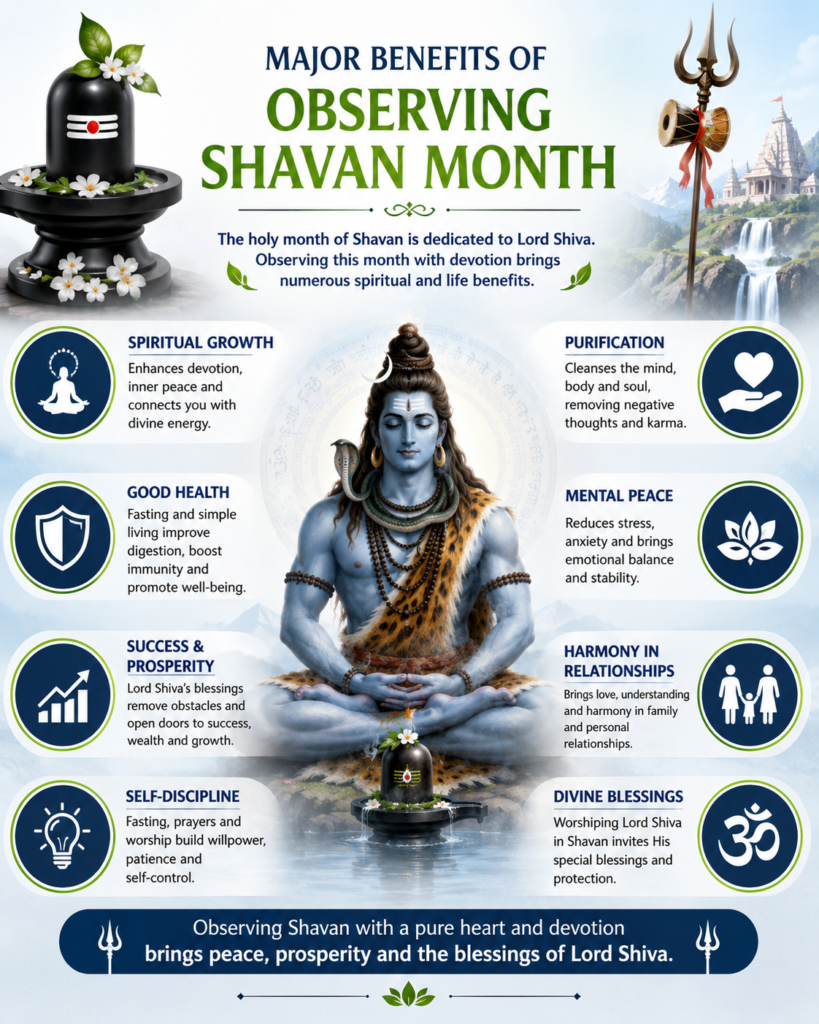
Observing Shavan (Shravan) Month is considered highly auspicious in Hindu tradition. Devotees dedicate this sacred period to worshipping Lord Shiva through prayers, fasting, mantra chanting, meditation, and acts of charity. It is believed that sincere devotion during Shavan brings both spiritual and personal benefits.
a. Deepens Spiritual Connection
Shavan is regarded as one of the most powerful months for strengthening one’s relationship with Lord Shiva. Daily prayers, meditation, and chanting help cultivate inner peace, devotion, and spiritual awareness.
b. Promotes Mental Peace and Emotional Balance
Practices such as chanting “Om Namah Shivaya”, reading sacred scriptures, and observing periods of silence can help reduce stress, improve focus, and foster emotional stability.
c. Encourages Self-Discipline
Observing fasts, maintaining a sattvic (pure) diet, and following spiritual routines encourage self-control, patience, and mindful living.
d. Inspires Positive Lifestyle Changes
Shavan motivates devotees to avoid harmful habits, speak truthfully, practice compassion, and lead a more balanced and ethical life.
e. Supports Family Harmony
Many devotees pray for the health, happiness, and unity of their families. Worship and shared religious observances during Shavan often strengthen family bonds and promote mutual understanding.
f. Blessings for Marriage and Relationships
According to Hindu tradition, unmarried devotees often pray for a suitable life partner, while married couples seek Lord Shiva and Goddess Parvati’s blessings for a happy and harmonious married life.
g. Encourages Charity and Compassion
Donating food, clothing, or other essentials and helping those in need are highly encouraged during Shavan. These acts of kindness foster generosity, gratitude, and social responsibility.
h. Helps Cultivate Positive Karma
Hindu beliefs emphasize that righteous actions, sincere worship, and selfless service performed during this sacred month contribute to positive karma and spiritual progress.
i. Creates an Opportunity for Self-Reflection
Shavan is an ideal time to reflect on personal goals, habits, and values. Many devotees use this period to seek forgiveness, let go of negativity, and focus on personal growth.
j. Brings a Sense of Hope and Divine Grace
Devotees believe that worshipping Lord Shiva with sincerity during Shavan invites divine blessings, helps overcome life’s challenges, and provides strength, courage, and optimism for the future.
k. Strengthens Faith and Devotion
Regular participation in temple visits, bhajans, Rudrabhishek, and scripture reading deepens faith and encourages a lifelong commitment to spiritual practices.
l. Promotes Holistic Well-Being
The combination of prayer, meditation, mindful eating, fasting (where appropriate), and positive conduct supports overall well-being by nurturing the mind, body, and spirit.
8. DAILY RITUALS DURING SHRAVAN MONTH
Many devotees perform the following rituals:
i. Early Morning Bath
Begin the day with a bath before sunrise.
ii. Visit a Shiva Temple
Offer prayers to the Shiva Lingam.
iii. Perform Abhishek
Offer:
- Water
- Milk
- Honey
- Yogurt
- Ghee
- Sugar
- Gangajal
iv. Offer Sacred Items
- Bilva (Bel) leaves
- White flowers
- Dhatura
- Bhasma
- Sandalwood paste
- Fruits
v. Chant Shiva Mantras
Popular mantras include:
- Om Namah Shivaya
- Maha Mrityunjaya Mantra
- Rudram
- Shiva Chalisa
vi. Read Sacred Texts
Many devotees read:
- Shiva Purana
- Shiv Chalisa
- Rudrashtakam
- Lingashtakam
8. FASTING DURING SHRAVAN
Different types of fasting are observed:
i. Shravan Somvar Vrat
Observed every Monday.
ii. Solah Somvar
Sixteen consecutive Monday fasts.
iii. Full-Month Fast
Some devotees consume only one meal daily.
iv. Fruit Fast
Many eat fruits, milk, and vrat-approved foods.
9. FOODS COMMONLY CONSUMED DURING FASTS
Allowed foods generally include:
- Fruits
- Milk
- Curd
- Dry fruits
- Sabudana
- Singhara flour
- Kuttu flour
- Rock salt
- Coconut water
Foods commonly avoided include:
- Onion
- Garlic
- Non-vegetarian food
- Alcohol
- Tobacco
- Processed foods
10. IMPORTANT FESTIVALS DURING SHRAVAN 2026
i. Shravan Somvar
Dedicated to Lord Shiva.
ii. Mangala Gauri Vrat
Observed by married women for family well-being.
iii. Hariyali Teej
Celebrates the divine union of Shiva and Parvati.
iv. Nag Panchami
Worship of serpent deities associated with Lord Shiva.
v. Putrada Ekadashi
Observed for family blessings and spiritual merit.
vi. Raksha Bandhan
Celebrates the bond between brothers and sisters.
vii. Kanwar Yatra
One of the largest religious pilgrimages during Shavan.
Devotees:
- Collect holy Ganga water
- Walk barefoot for long distances
- Offer the sacred water on Shiva Lingams
- Chant “Bol Bam”
11. POWERFUL REMEDIES DURING SHRAVAN MONTH
i. Offer Water Daily
Pour clean water or Gangajal over the Shiva Lingam.
Benefit:
Removes negativity and enhances spiritual purification.
ii. Offer Bilva Leaves
Offer three-leaf Bilva leaves while chanting “Om Namah Shivaya.”
Benefit:
Brings prosperity and Lord Shiva’s blessings.
iii. Chant Maha Mrityunjaya Mantra
Recite 108 times daily.
Benefit:
Promotes health, longevity, and protection.
iv. Light a Ghee Lamp
Light a lamp before Lord Shiva every evening.
Benefit:
Invites positive energy and removes darkness from life.
v. Donate Food
Feed poor people, cows, birds, or needy families.
Benefit:
Generates positive karma and blessings.
vi. Observe Monday Fast
Maintain discipline and devotion throughout the day.
Benefit:
Helps fulfill sincere wishes.
vii. Perform Rudrabhishek
Arrange Rudrabhishek at a Shiva temple or perform it at home with proper guidance.
Benefit:
Believed to remove major obstacles and attract peace.
viii. Avoid Anger and Negative Speech
Practice kindness, patience, and truthfulness.
Benefit:
Enhances the spiritual value of worship.
ix. Meditate on Lord Shiva
Spend at least 15–20 minutes in silent meditation.
Benefit:
Improves concentration and emotional balance.
x. Donate White Items
Donate milk, rice, white clothes, or sweets.
Benefit:
Traditionally associated with peace, purity, and goodwill.
12. DO’S DURING SHRAVAN
- Wake up early
- Maintain cleanliness
- Chant Shiva mantras daily.
- Practice honesty and compassion.
- Visit Shiva temples.
- Read sacred scriptures.
- Perform charity.
- Eat sattvic food.
- Respect elders and teachers.
13. DON’TS DURING SHRAVAN
- Avoid alcohol and intoxicants.
- Avoid non-vegetarian food.
- Refrain from unnecessary arguments.
- Avoid speaking harshly.
- Do not waste food.
- Avoid negative thoughts.
- Do not disrespect religious practices.
14. WHY IS SAWAN IS CONSIDERRED SO POWERFUL?
According to Hindu tradition, the spiritual energy of Lord Shiva is especially revered during Shavan. Devotees believe that sincere worship, self-discipline, mantra chanting, and righteous conduct during this month help purify the mind, deepen devotion, and foster inner transformation.
15. CONCLUSION
The greatest benefit of observing the month of Shravan is that it inspires a life filled with devotion, discipline, compassion, and inner transformation. In Hindu tradition, this sacred month is associated with the special blessings of Lord Shiva, but its true essence lies in true faith, righteous deeds, and continued spiritual growth.
16. WRAPPING UP
Shavan Month 2026 is an ideal time to strengthen one’s spiritual practice through devotion to Lord Shiva. Whether by observing Shravan Somvar fasts, performing Abhishek, chanting sacred mantras, engaging in charity, or living a disciplined and compassionate life, devotees use this sacred month to seek peace, prosperity, and spiritual growth. The essence of Shavan lies not only in rituals but also in cultivating humility, self-control, and devotion.
You still have any question, feel free to ask me via comments or via email.
Don`t forget to share what you like here on
Youtube,
Facebook, Instagram with your friends and family.
At DivineNewz, a spiritual and temples news related information providers, is working on the project to work for religion and information about the temples to share with you to bring new ideas about spiritual and religious world.
If you want article on any other religious specific topic then post the comment i will write on that topic.
Get in touch with DivineNews by contacting by divinenewz6@gmail.com/ For more information, please visit:
https://www.divinenewz.com
ARTICLE WRITTEN BY:
Divinenewz is a firm Working very proficiently for sharing the divinely knowledge, darshan and pilgrim details and many more in spiritual field. If you have any unique temple and divine place around the globe, then contact us at divinewisdom0608@gmail.com, divinenewz6@gmail.com, or
For more information, please visit:
https://www.divinenewz.com
Follow Us :
1. FACEBOOK: Click Here…..
2. YOUTUBE: Subscribe & Share…..
3. WHATSAPP CHANNEL: Join & Share…..
What is the significance of Shavan Month?
Shavan is considered one of the holiest months in Hinduism, especially for the worship of Lord Shiva. It is associated with devotion, purification, and spiritual growth.<
Why are Mondays important during Shavan?
Mondays (Shravan Somvar) are traditionally dedicated to Lord Shiva. Many devotees observe fasts and perform special prayers on these days, believing they bring divine blessings and fulfillment of sincere wishes.
Can women observe Shravan Somvar Vrat?
Yes. Unmarried women often observe the fast while praying for a suitable life partner, and married women pray for marital harmony, family well-being, and prosperity.
What should be offered to Lord Shiva during Shavan?
Common offerings include water, Gangajal, milk, Bilva (Bel) leaves, white flowers, sandalwood paste, fruits, honey, yogurt, and ghee.
Which mantra is best to chant during Shavan?
“Om Namah Shivaya” is the most widely chanted Shiva mantra. Many devotees also recite the Maha Mrityunjaya Mantra for health, protection, and spiritual well-being.
Can Shavan rituals be performed at home?
Yes. You can worship a Shiva Lingam or image of Lord Shiva at home by offering water, Bilva leaves, flowers, lighting a lamp, chanting mantras, and reading Shiva-related scriptures.
What foods are allowed during Shravan fasting?
Many devotees consume fruits, milk, curd, dry fruits, sabudana, kuttu flour, singhara flour, and foods prepared with rock salt. Fasting practices vary according to family and regional traditions.
Is fasting compulsory during Shavan?
No. Fasting is a voluntary devotional practice. Those unable to fast due to age, health, pregnancy, or other reasons may focus on prayer, mantra chanting, charity, and righteous conduct instead.
Which festivals are celebrated during Shavan?
Major observances often include Shravan Somvar, Mangala Gauri Vrat, Hariyali Teej, Nag Panchami, Putrada Ekadashi, and Raksha Bandhan, depending on the regional calendar.
What are the best remedies for attracting positive blessings during Shavan?
Regular worship of Lord Shiva, offering Bilva leaves and water, chanting “Om Namah Shivaya” or the Maha Mrityunjaya Mantra, observing Monday fasts (if appropriate), performing acts of charity, maintaining a sattvic lifestyle, and practicing truthfulness and compassion are traditionally regarded as especially beneficial during Shavan.

What is the significance of Shavan Month?
Why are Mondays important during Shavan?
Mondays (Shravan Somvar) are traditionally dedicated to Lord Shiva. Many devotees observe fasts and perform special prayers on these days, believing they bring divine blessings and fulfillment of sincere wishes.
Can women observe Shravan Somvar Vrat?
Yes. Unmarried women often observe the fast while praying for a suitable life partner, and married women pray for marital harmony, family well-being, and prosperity.
What should be offered to Lord Shiva during Shavan?
Common offerings include water, Gangajal, milk, Bilva (Bel) leaves, white flowers, sandalwood paste, fruits, honey, yogurt, and ghee.
Which mantra is best to chant during Shavan?
“Om Namah Shivaya” is the most widely chanted Shiva mantra. Many devotees also recite the Maha Mrityunjaya Mantra for health, protection, and spiritual well-being.
Can Shavan rituals be performed at home?
Yes. You can worship a Shiva Lingam or image of Lord Shiva at home by offering water, Bilva leaves, flowers, lighting a lamp, chanting mantras, and reading Shiva-related scriptures.
What foods are allowed during Shravan fasting?
Many devotees consume fruits, milk, curd, dry fruits, sabudana, kuttu flour, singhara flour, and foods prepared with rock salt. Fasting practices vary according to family and regional traditions.
Is fasting compulsory during Shavan?
No. Fasting is a voluntary devotional practice. Those unable to fast due to age, health, pregnancy, or other reasons may focus on prayer, mantra chanting, charity, and righteous conduct instead.
Which festivals are celebrated during Shavan?
Major observances often include Shravan Somvar, Mangala Gauri Vrat, Hariyali Teej, Nag Panchami, Putrada Ekadashi, and Raksha Bandhan, depending on the regional calendar.
What are the best remedies for attracting positive blessings during Shavan?
Regular worship of Lord Shiva, offering Bilva leaves and water, chanting “Om Namah Shivaya” or the Maha Mrityunjaya Mantra, observing Monday fasts (if appropriate), performing acts of charity, maintaining a sattvic lifestyle, and practicing truthfulness and compassion are traditionally regarded as especially beneficial during Shavan.