


Official Website : https://divinenewz.com/
TABLE OF CONTENT |
1. INTRODUCTION
Navratri is one of the most widely celebrated and spiritually important festivals in India.
The word Navratri comes from Sanskrit:
“Nava” means
nine and
“Ratri” means
night. So, Navratri literally means nine nights. During these nine nights and ten days, devotees across India and in many parts of the world worship Goddess Durga and her nine divine forms. The festival is celebrated with deep devotion, fasting, prayer, music, dance, and cultural activities.
Navratri, meaning “nine nights,” is one of the most significant Hindu festivals celebrated with immense devotion and enthusiasm across India and by Hindus worldwide.
This nine-day and nine-night festival is dedicated to the worship of the Hindu goddess Durga and her various forms. The festival is celebrated with great enthusiasm and fervor across India and in many parts of the world where Indian communities reside.
Navratri is not just a religious event; it is also a cultural celebration marked by dance, music, and the coming together of families and communities. Celebrated in different forms in different regions of India, this festival holds immense spiritual, cultural, and social significance.
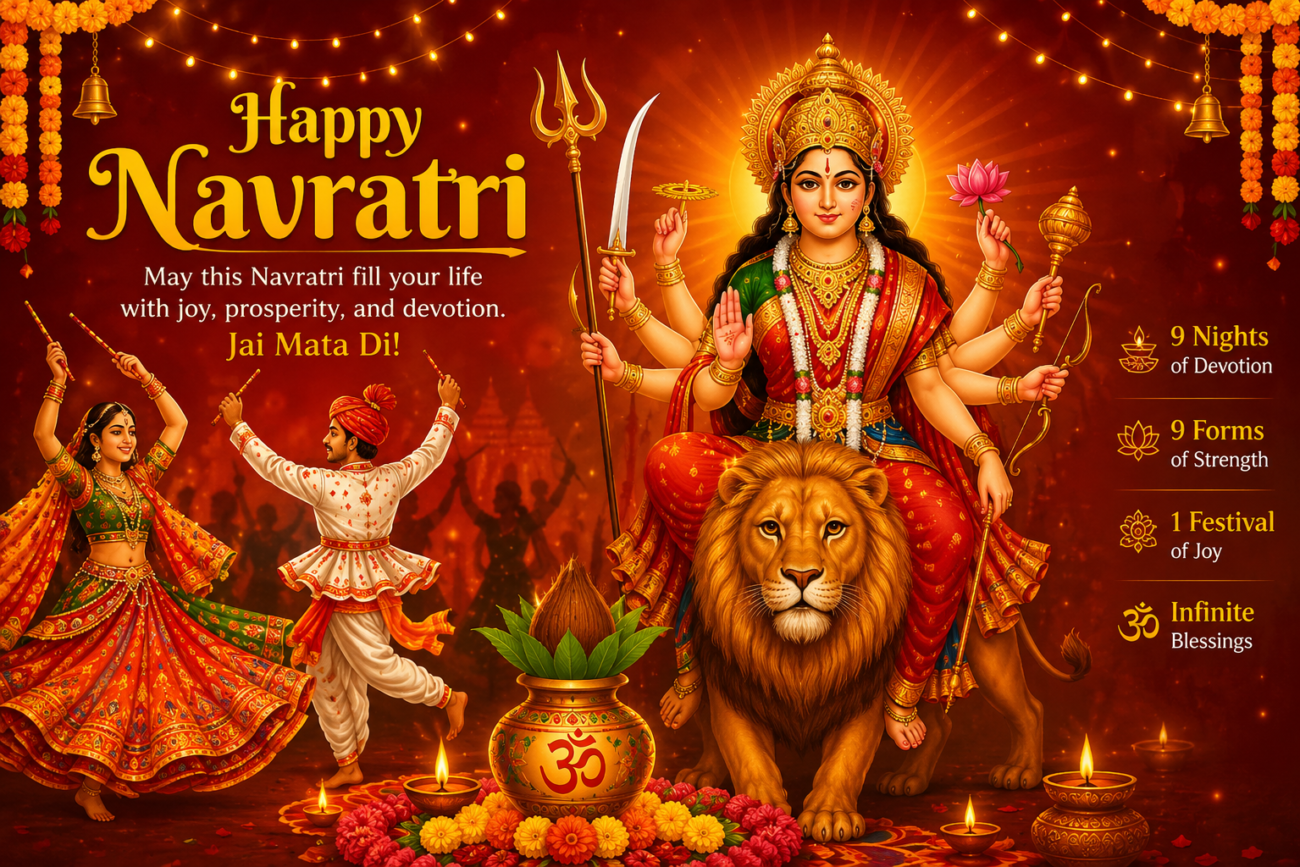
Navratri is dedicated to the worship of Goddess Durga and her nine divine forms and signifies the triumph of good over evil. The festival is celebrated twice a year—once in the spring season (Chaitra Navratri) and once in the autumn season (Sharad Navratri), with Sharad Navratri being more widely celebrated.
During these nine nights and ten days, devotees observe fasts, perform rituals, dance (such as Garba and Dandiya), and pray to the Mother Goddess to receive her blessings. Each day of Navratri is associated with a different form of Goddess Durga, and specific colors, offerings, and mantras are followed to invoke her divine power.
Navratri not only has religious significance, but it also has numerous physical, mental, and spiritual benefits. From detoxifying the body through fasting to fostering mental discipline and strengthening community cohesion, this festival is a holistic celebration of life, faith, and well-being.
Navratri is not only a religious observance. It is also a celebration of feminine divine power, inner strength, renewal, victory of good over evil, and spiritual discipline. For millions of people, it is a time to reflect, purify the mind and body, and reconnect with faith, family, and tradition
Navratri is celebrated in different ways in different regions of India. In some places, it is marked by fasting and temple visits. In others, it is accompanied by colorful dances such as Garba and Dandiya Raas. In some regions, the festival ends with Durga Puja, while in others it concludes with Dussehra or Vijayadashami, which symbolizes the victory of righteousness over evil.
To understand Navratri fully, it is important to explore its meaning, history, religious significance, regional customs, rituals, and spiritual message.
2. THE MEANING AND SIGNIFICANCE OF NAVRATRI
The name Navratri itself holds profound meaning. The number nine holds special significance in Hinduism. It symbolizes perfection, divine energy, and the nine forms of Shakti, the feminine cosmic power. Each of the nine nights is dedicated to a form of the goddess Durga.
The festival is observed twice a year in many Hindu traditions:
- Chaitra Navratri : celebrated in the spring, usually in March or April.
- Sharad Navratri : celebrated in autumn, usually in September or October.
Among these, Sharad Navratri is the most widely celebrated and culturally prominent. It ends with Vijayadashami, also known as Dussehra in many regions.
Navratri is a festival of discipline, devotion, and transformation. People fast, pray, clean their homes, and abstain from certain foods and habits. This is believed to develop self-control and spiritual awareness in devotees. The festival also reminds us that truth, knowledge, and divine grace can conquer darkness, ignorance, and evil.
3. THE RELIGIOUS SIGNIFICANCE OF NAVRATRI
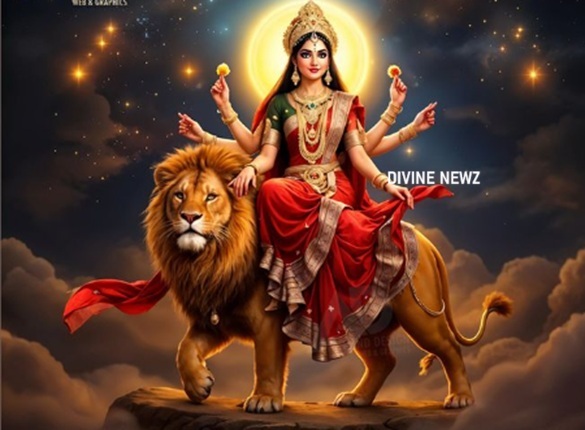
Navratri is primarily devoted to Maa Durga, the powerful goddess who represents strength, protection, and motherly compassion. She is worshipped in many forms, each representing a different aspect of life and energy.
According to Hindu belief, the goddess appears in nine forms over the nine days of Navratri. These forms are called the Navadurga. They are:
- Shailaputri : the daughter of the mountains.
- Brahmacharini : the symbol of penance and devotion.
- Chandraghanta : the fierce form who brings courage.
- Kushmanda : the creator of the universe.
- Skandamata : the motherly form, protector of devotees.
- Katyayani : the warrior goddess.
- Kalaratri : the destroyer of darkness and fear.
- Mahagauri : the symbol of purity and serenity.
- Siddhidatri : the giver of spiritual powers and success.
Each figure teaches a spiritual lesson. Together they represent the journey from ignorance to knowledge, from fear to courage, and from suffering to liberation.
Navratri also celebrates Goddess Durga’s victory over the demon Mahishasura. In Hindu mythology, Mahishasura symbolizes arrogance, pride, and evil forces. Durga’s victory over him represents the triumph of divine power and justice over destructive tendencies.
In some traditions, Navratri is also associated with Lord Rama and his victory over Ravana, especially in the context of Dussehra. Thus, the festival encompasses multiple meanings, all centered on religion, power, and moral victory.
4. THE STORY BEHIND NAVRATRI
The origins of Navratri are rooted in ancient Hindu scriptures, myths, and traditions. One of the most famous tales is the story of the battle between Goddess Durga and Mahishasura. Mahishasura was a powerful demon who had acquired immense power through boons and blessings. He became arrogant and began to trouble the gods and the world. Unable to defeat him, the gods combined their powers to create Goddess Durga.
Goddess Durga fought Mahishasura for nine days and nine nights. On the tenth day, she slew him and restored peace and balance to the universe. This story is remembered as a symbolic victory of good over evil.
Another important story associated with Navratri is from the Ramayana. Lord Rama worshipped Goddess Durga before going to war against Ravana. His devotion and discipline helped him receive divine blessings and subsequently win the battle. This is why the end of Navratri is often associated with Vijayadashami, the day of victory.
These stories are not mere myths. They are powerful symbols. They remind people that life is full of internal and external struggles, and overcoming them requires courage, dedication, and integrity.
5. WHY NAVRATRI IS CELEBRATED FOR NINE DAYS?
The nine days of Navratri have symbolic significance. Each day is dedicated to a form of Goddess Durga, and each form represents a stage of spiritual evolution.
These nine days also correspond to the idea that humans must undergo discipline, purification, and devotion before attaining higher knowledge. This festival encourages people to focus on God, away from distractions.
The number nine is often associated with perfection and divine completeness. It holds special significance in many cultures. In Navratri, it symbolizes the completion of the spiritual cycle.
The final day, or tenth day, is celebrated as Vijayadashami, meaning the tenth day of victory. It symbolizes the fruition of nine days of spiritual endeavor and devotion.
6. THE NINE FORMS OF GODDESS DURGA
Navratri is deeply connected with the worship of the Navadurga, the nine manifestations of Goddess Durga. Each form has a distinct identity, story, and significance.
1. Shailaputri
She is worshipped on the first day. Her name means “daughter of the mountain.” She symbolizes purity, power, and the beginning of spiritual practice.
2. Brahmacharini
Worshipped on the second day, this goddess symbolizes devotion, austerity, and self-discipline. She teaches patience and determination.
3. Chandraghanta
On the third day, devotees worship Chandraghanta, who is fierce and heroic. She protects her devotees from fear and negativity.
4. Kushmanda
The fourth day is dedicated to Kushmanda, believed to have created the universe with her divine smile. She symbolizes cosmic energy and creativity.
5. Skandamata
On the fifth day, people worship Skandamata, the mother of Lord Skanda (Kartikeya). She represents motherhood, compassion, and nurturing love.
6. Katyayani
The sixth day is dedicated to Goddess Katyayani, known for courage and justice. She is often worshipped for strength and marital happiness.
7. Kalaratri
The seventh day is dedicated to Kalaratri, the most fierce form of Durga. She destroys fear, darkness, and evil. Worshiping her helps devotees overcome inner weaknesses.
8. Mahagauri
On the eighth day, devotees worship Mahagauri, the symbol of peace, beauty, and purity. She bestows peace and grace.
9. Siddhidatri
The ninth day is dedicated to Siddhidatri, the giver of spiritual powers and perfection. She blesses devotees with knowledge and success.
Together, these nine forms demonstrate the many facets of divine energy. The Goddess exists in all forms—gentle and fierce, nurturing and protective, compassionate and powerful.
7. HOW NAVRATRI IS CELEBRATED
Navratri celebrations vary greatly across India, but certain practices are common across most regions.
1. Fasting
Many devotees fast during Navratri. Some consume only fruits, milk, and special foods for the fast. Others eat only once a day or follow a strict diet, avoiding grains, onions, garlic, or meat. Fasting is considered a way to purify the body and mind, improve discipline, and focus on prayer.
2. Prayer and Worship
People clean their homes, decorate altars, light lamps, and offer flowers, fruits, incense sticks, and sweets to the goddess. Many recite prayers, mantras, and hymns dedicated to the Durga Saptashati, Devi Mahatmya, or other sacred texts dedicated to the goddess.
3. Kanya Puja
In many traditions, young girls are worshipped on the eighth or ninth day as symbols of the divine feminine. Their feet are washed, and they are offered food, gifts, and honors. This ritual reflects the belief that the Goddess resides within every girl and woman.
4. Cultural Celebrations
Navratri is also a festival of music and dance. In Gujarat and other western states, people gather every night for Garba and Dandiya Raas. These dances are performed in large circles, often around a statue, lamp, or idol of the goddess. These dances express joy, devotion, and a sense of community.
5. Temples and Processions
During Navratri, many temples hold special prayers, rituals, and processions. In some places, huge idols of the goddess are installed and lavishly worshipped. In eastern India, especially West Bengal, Durga Puja pandals are beautifully decorated and attract large crowds.
6. Social and Cultural Bonding
Navratri brings families, friends, and communities together. People dress in traditional clothes, share festive meals, exchange blessings, and participate in cultural activities. It is both a religious and a social celebration.
8. NAVRATRI IN DIFFERENT PARTS OF INDIA
One of the most fascinating things about Navratri is how differently it is celebrated across India.
1. Gujarat
Gujarat is famous for its vibrant Garba and Dandiya festivals. Men and women wear colorful traditional attire and dance late into the night. The atmosphere is filled with energy, devotion, and joy.
2. West Bengal
In West Bengal, Navratri coincides with Durga Puja, one of the biggest festivals in the state. Huge artistic pandals are built, and beautifully crafted idols of Goddess Durga are worshipped. Families visit these pandals, enjoy special food, and participate in cultural events.
3. North India
In many states of North India, Navratri is associated with fasting, temple visits, and the story of Rama and Ravana. The festival often culminates with Ramlila performances and the burning of effigies of Ravana on Dussehra.
4. South India
In South India, Navratri is celebrated with Golu or Bommala Koluvu, in which dolls and idols are decorated on the staircases of homes. Families invite guests, sing devotional songs, and offer special food. Temples also play an important role.

2 thoughts on “WHAT IS NAVRATRI?”